Who gets to see the note?
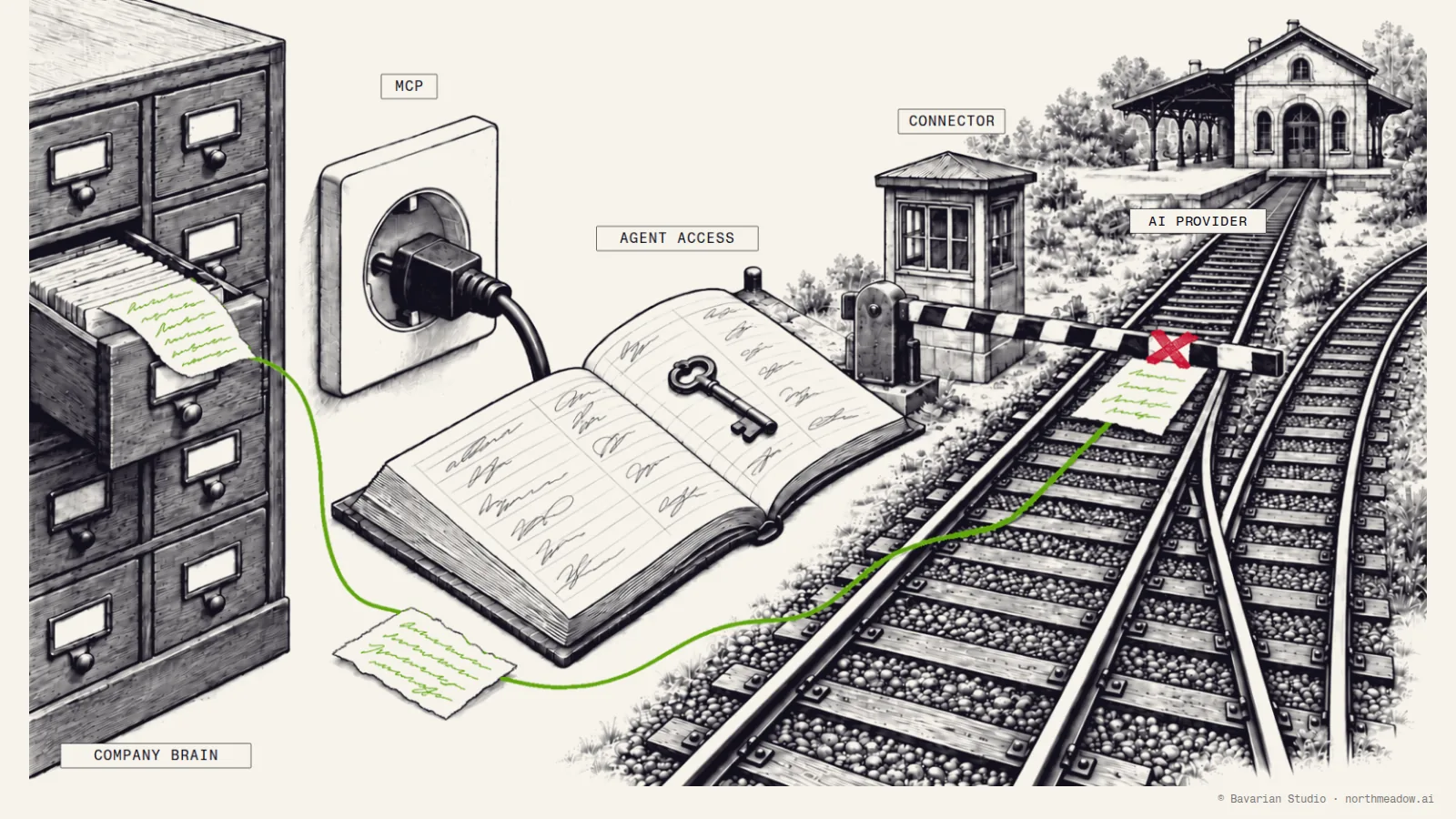
You ask an agent to prepare a supplier briefing. It proposes an option your team has already ruled out. The reason sits in a decision note, but that note belongs to another conversation in another tool. You find it, paste it into the chat and explain the decision again.
Beneath the decision sit confidential details, e.g. the supplier's prices. The agent needs the reasoning for the briefing. The model provider needs only the part the company agrees to send.
This is the company brain Northmeadow is building: shared knowledge that agents carry into their work, with the company deciding who reads it and which provider receives what. Follow that note through the connection, the permission to open it and the decision to send an excerpt. Part of this already runs in the first alpha: notes stay sealed on your own machine, and the Record keeps track of access. The connection, agent access and the connector are in the works.
The socket: a common way to connect
A socket saves you from rewiring a room whenever you change equipment. The plug fits, the connection works, and you can get on with the job.
MCP, the Model Context Protocol, does that job between an AI application and a tool. It gives them a common way to exchange requests and results. An application asks for information in a form the tool understands; the tool returns it in a form the application can use.
For Northmeadow, this connection is in the works. Claude Code or Codex will start a local Northmeadow service and talk to it over MCP. The service runs on your machine and handles requests for knowledge from the company brain. The same protocol lets another compatible application connect, so knowledge remains useful as tools change. In the first alpha, the agent works on a folder copy of the notes as Markdown files.
MCP is the plug that makes the connection work; the company's project permissions still decide what that connection opens.
That distinction lets a team test the right thing. A working connection establishes that the request can reach the tool. The next step is to give the agent a key to the right project.
The key and visitor book: a named agent comes in
Picture a house key handed to a visitor whose name goes in the book. You know who has arrived, which door the key opens and whose visit you are looking at later.
Agent access brings that arrangement to the company brain. Northmeadow groups work into mandates: a project, a customer engagement or a product line. The mandate holds the knowledge for that work and defines who has access to it.
The first alpha already lets you register agents and give them access that expires and can be withdrawn. The rest is in the works: a person confirms the agent's access in the browser, the authorised local software receives the key to open the mandate's content, and the agent participates under its own identity.
The visitor book is the Record. It already keeps access in a hash chain that the company can export and check itself. With agent access, it will also name the agent and the notes its local software reports reading. A person reviewing the supplier briefing can then see which decision note the agent read, alongside the result, instead of searching scattered chats.
That is the design: the key gives this agent entry to this mandate; permission to send its contents onward is a separate decision.
That separation is useful even when the agent needs to read a whole note. Reading supplies the context for the work. The company can then choose the excerpt used outside it.
The switch and customs post: the excerpt takes its route
At a railway junction, the points choose the track. Beside them, a customs post checks the cargo against the rules for its destination. A route and permission to use it belong together.
The provider-independent connector, now being built, fills that role between the company brain and model providers such as Anthropic or OpenAI. It checks the outgoing material and the selected destination against the company's rules before sending the request.
The company specifies what may travel to which provider. The connector enforces that decision on the request passing through it. For this check to govern the journey, provider requests travel through the connector.
The connector controls which provider gets to see what.
This also gives changing providers a practical meaning. You select a different destination for model work while decisions, explanations and accumulated knowledge remain in the company brain. The next model works from that shared knowledge.
The note, from request to briefing
Here is how it is meant to run once all the parts are in place. Return to the supplier decision. The note records the rejected option, the operational reason for rejecting it and confidential details, e.g. the supplier's prices. For this briefing, the company approves an excerpt containing the decision and its reason, sent to a specified provider. The prices stay local.
The agent requests the note through the local Northmeadow service over MCP. Agent access checks its permission for the mandate. The authorised software opens the note, and the read is recorded under the agent's name.
The agent prepares the model request using the approved excerpt. Before dispatch, the connector checks that request against the company's approval for the material and destination. If the request includes the full note instead, it is refused. With the approved excerpt and provider, it proceeds.
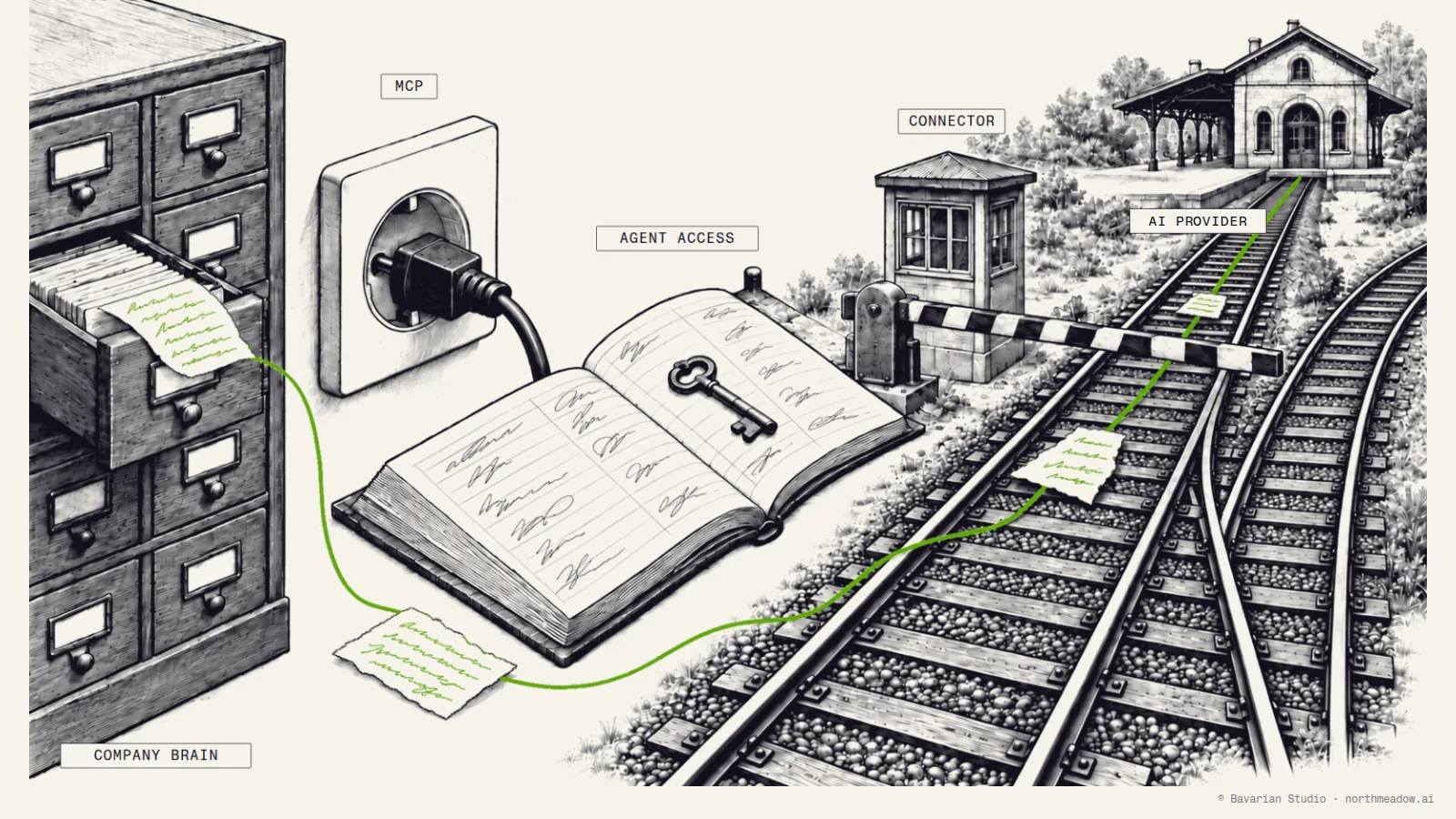
The model receives enough background to explain the decision in the briefing. The prices remain outside that request. The company's rule determines the boundary; the connector applies it to what is sent.
A company that keeps what it learns
Northmeadow brings this journey into shared memory for AI agents. People contribute knowledge, read alongside the agents and oversee the work. Content already stays sealed in the service on your own machine, with opening keys held by authorised people. Agents get their own keys with agent access.
Decisions become part of the company's working knowledge. Their reasons remain available when a project changes hands, a different agent takes over or the company chooses another model provider.
The next briefing starts with the decision already within reach. A new agent picks up its reasons and carries the work forward. The company chooses its models without rebuilding its memory.