Shared agent memory is easy. Control is the hard part.
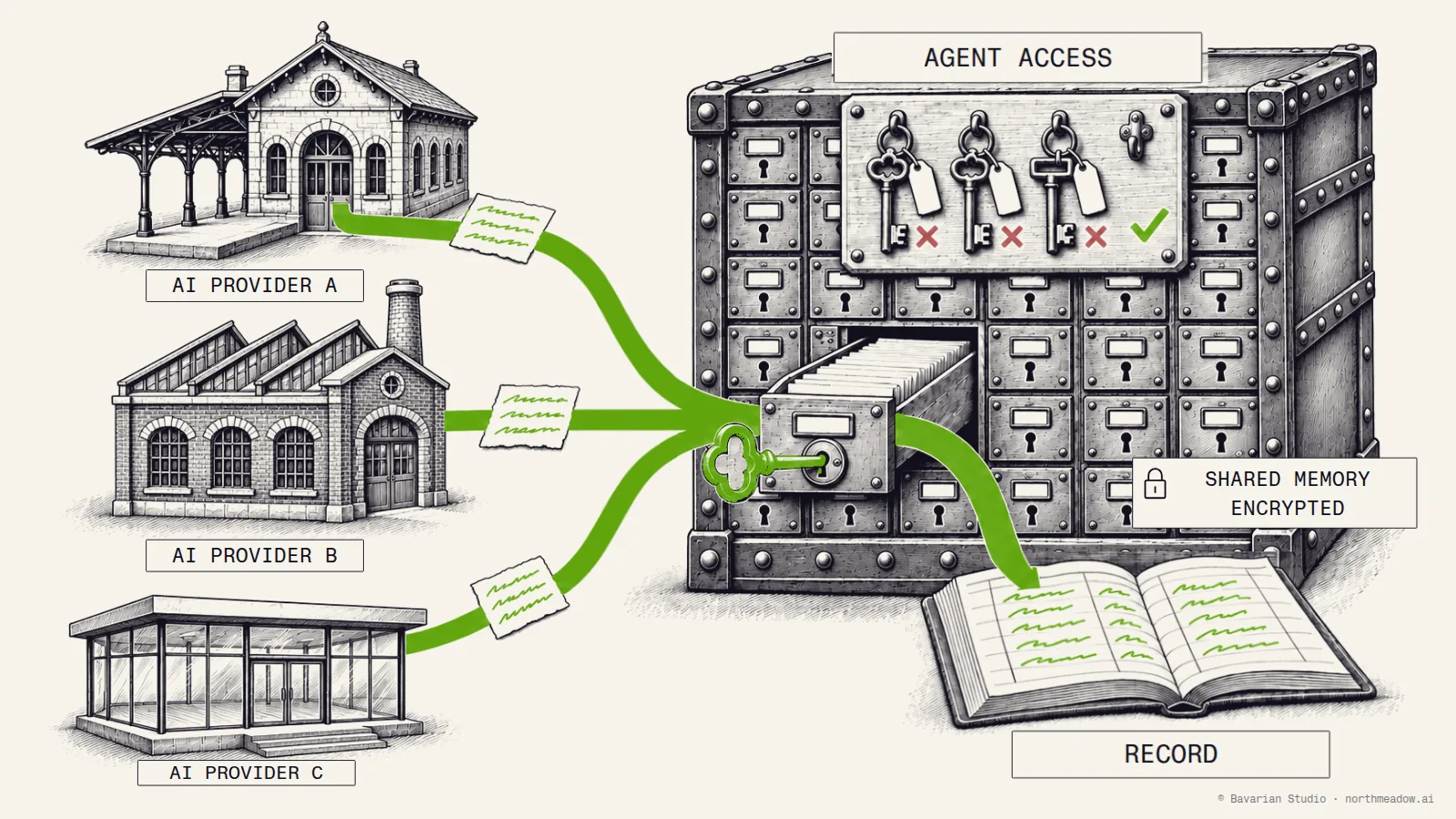
Your coding agent refactored the billing module on Friday. On Monday a second agent, from a different provider, starts writing tests against the old interface, because nobody told it. A third drafts the release notes from a chat log that is already out of date. Each of them is good at its job. None of them knows what the others decided.
Shared memory fixes that: one place where every agent reads what the others measured, decided and dropped. The moment you set it up, though, three questions show up. Who is in charge? Who can see what? And who keeps the record?
How you answer them decides whether shared memory makes your team faster or quietly takes the controls away from it. This is how Northmeadow answers them, and how much of it is built.
Who is in charge
People are, but not by clicking "approve" on every step. If ten agents wait for you to sign off each change, you become the bottleneck and the agents sit idle.
Northmeadow is built around visibility instead. You decide once which agent works on which project, and for how long; then the agent works, and what it did is meant to be visible to you without you approving each step. That part is in the first alpha: you register agents, give them access that expires, and take it back whenever you want.
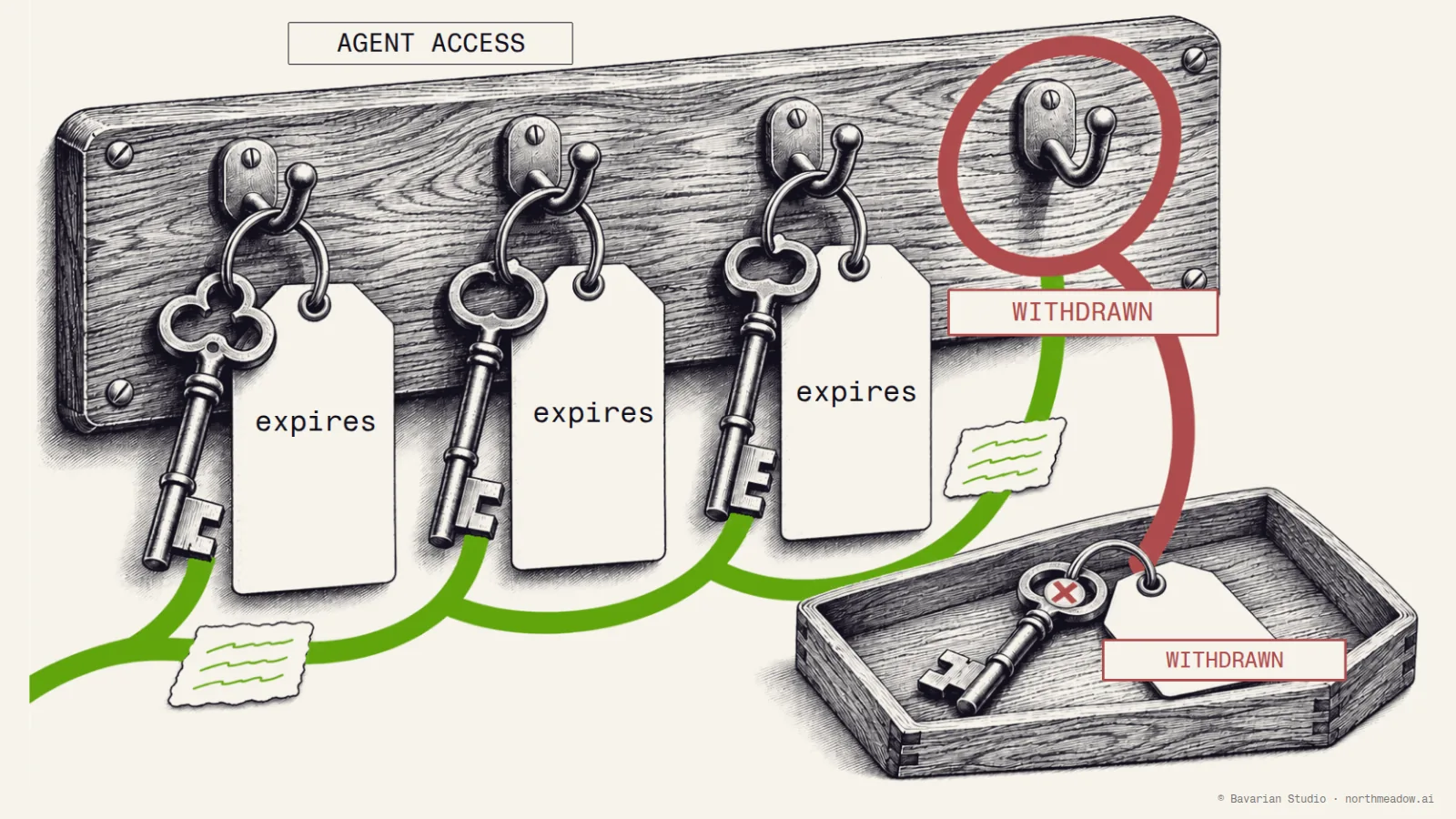
In the works is a confirmation step in the browser, where a person approves the access before the agent's software gets the key.
Who can see what
Work in Northmeadow is grouped into mandates: a project, a client engagement, a product line. The mandate is the boundary, so an agent cleared for the billing refactor doesn't get the hiring plan along with it.
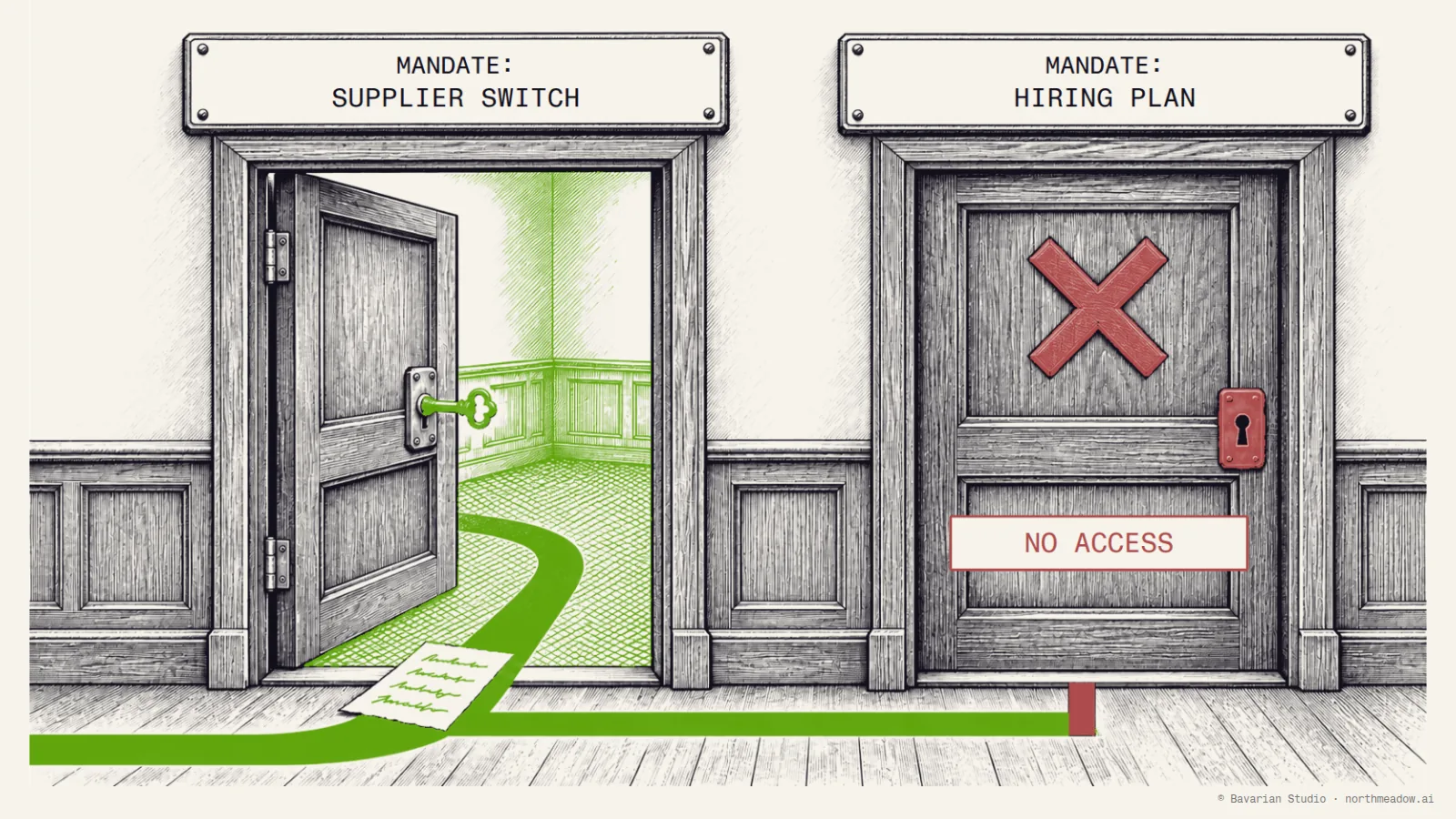
Content is encrypted, and only the people entitled to it hold the keys. Northmeadow can't read your content. An agent reads only what you share with it.
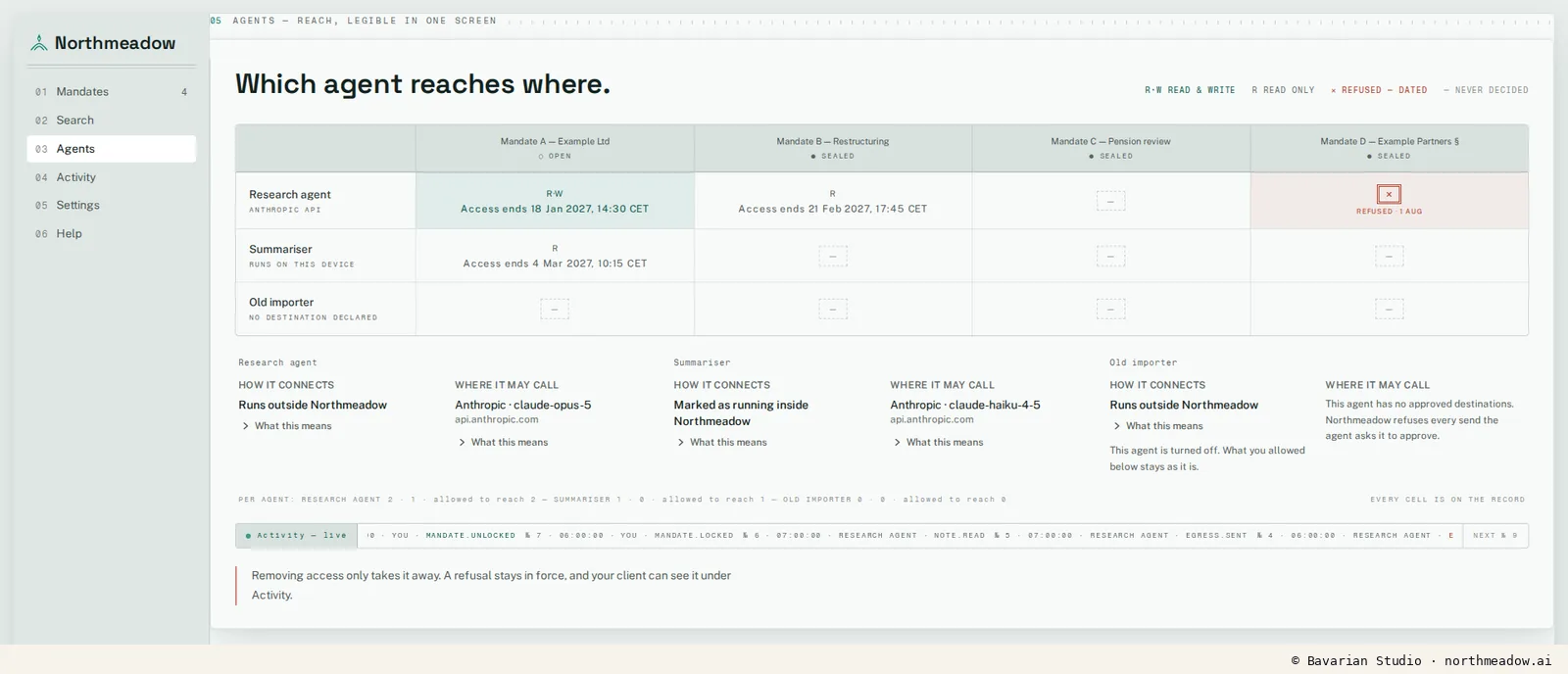
Every agent already has its own entry and its own rights per mandate. In the works is a key of its own, which its software uses to open the content, and a connector meant to check every request to a model provider against what the company has approved for that provider. Our first explainer follows a single decision note along that path.
Who keeps the record
The Record logs access to a mandate that goes through Northmeadow, and the company can export it and check it for itself, without asking us. The Record is in the first alpha. With agent access, it is meant to show which notes an agent read as well.
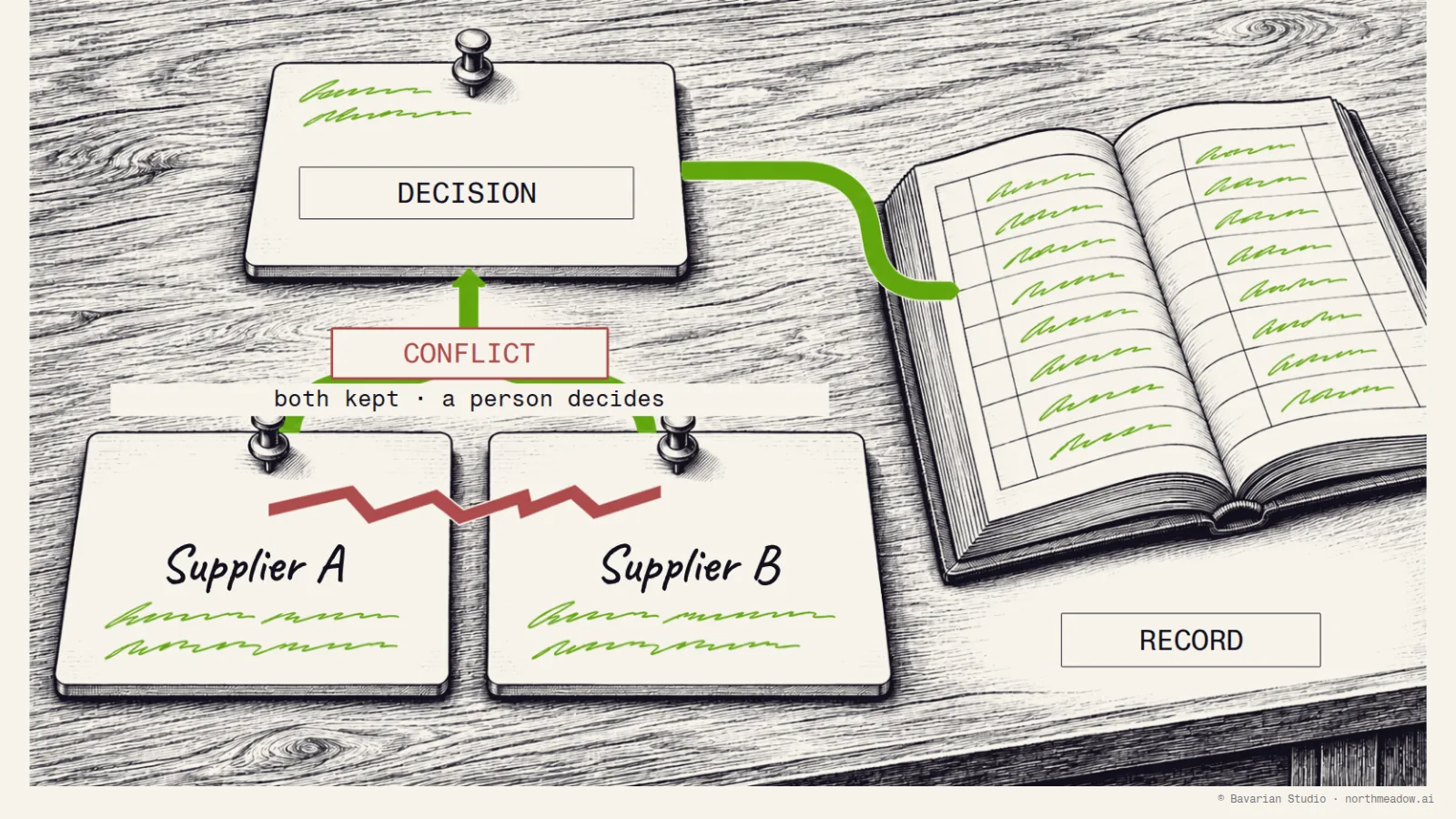
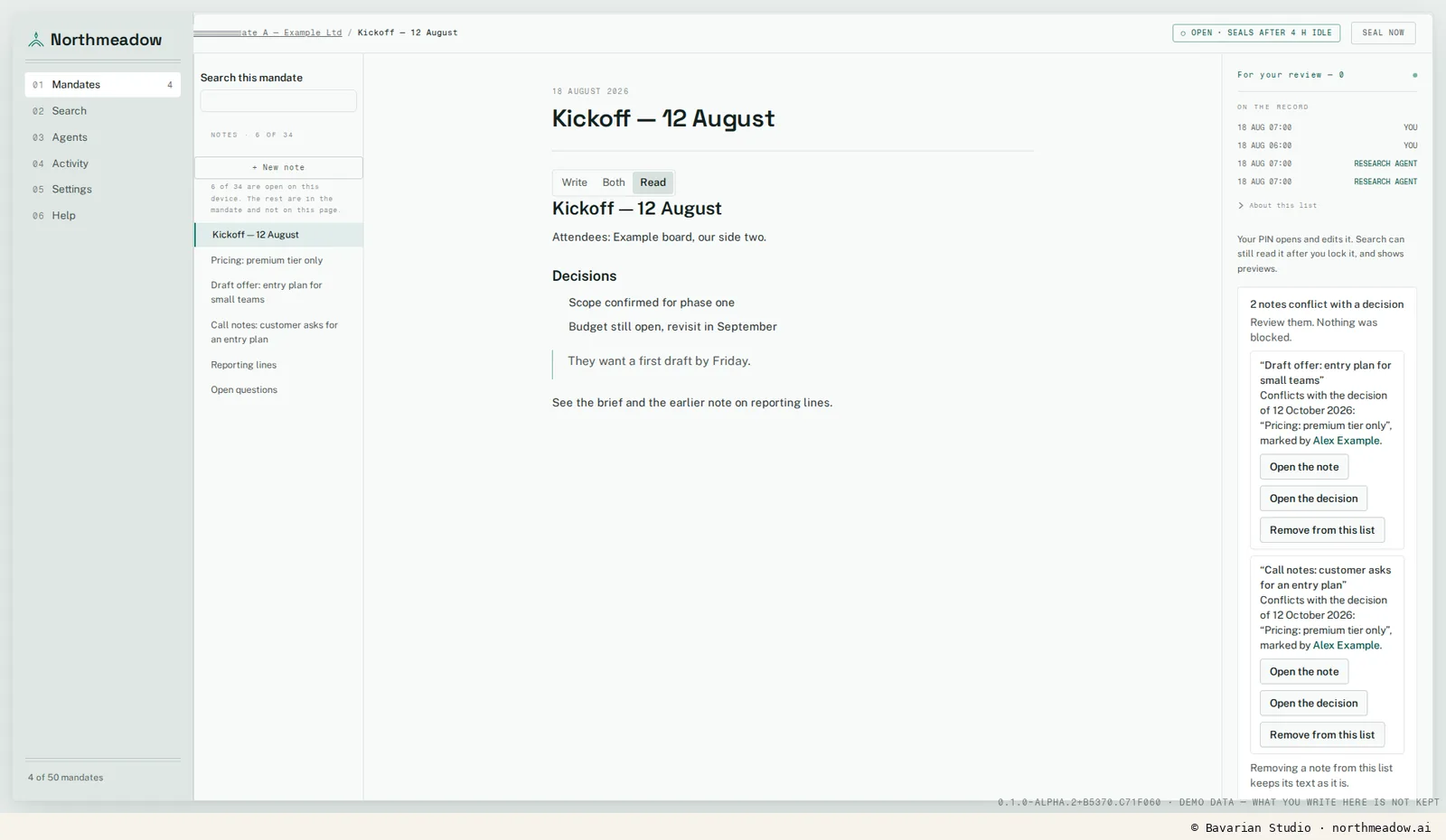
A log alone isn't memory, though; the knowledge also has to hold up. When one agent writes down "supplier A" and another "supplier B", neither should quietly overwrite the other. So Northmeadow shows, next to a decision, the notes that conflict with it. Both stay, and a person decides which one holds.
Where this is going
New knowledge should reach everyone it concerns without anyone forwarding it. An agent that joins tomorrow will know yesterday's decisions and why they were made. And when you switch models, the memory stays where it is.
There is a lot left to build. The foundation is in place: content encrypted on your own machine, per-agent access that expires, and a Record the company checks for itself. Alpha 1 is free to try.